There’s a quiet irony in modern life. We have more technology than ever before, yet we’re still circling back to something simple: water. Not sparkling water in a glass bottle with a designer label. Just plain, everyday water from the tap.
And more people are asking the same question lately—how do we make it cleaner without creating more waste in the process?
Because let’s be honest. The plastic bottles stacked in recycling bins don’t exactly scream sustainability. Nor does constantly replacing bulky filtration cartridges without understanding what they’re actually doing.
The conversation around water has shifted. It’s no longer just about purity. It’s about responsibility.
When “Clean” Isn’t Enough
Most municipal water systems meet safety standards. That’s important to say upfront. But safe doesn’t always mean satisfying.
Sometimes there’s a faint chemical aftertaste. Sometimes there’s sediment. Sometimes there’s just a subtle doubt in the back of your mind.
That’s where filtration steps in—not as a panic response, but as a refinement tool.
Homeowners are increasingly drawn to eco-friendly purification systems that improve water quality without excessive waste or energy consumption. These systems focus on reducing plastic dependency, optimizing filter lifespan, and minimizing water waste during the purification process.
It’s less about over-engineering and more about thoughtful design. Systems that regenerate efficiently. Filters that last longer. Components that can be replaced individually instead of discarding entire units.
It’s a shift from disposable thinking to sustainable thinking.
The Science Beneath the Surface
Water purification has evolved far beyond simple carbon filters.
Modern systems often work at a microscopic scale, targeting impurities that can’t be seen or tasted. The phrase molecular-level purification sounds like something pulled from a science textbook—and in a way, it is.
Technologies like reverse osmosis membranes operate at an incredibly fine scale, separating water molecules from dissolved solids and certain contaminants. The result is water that tastes clean and neutral, stripped of many microscopic impurities.
But here’s the nuance: not every home needs that level of purification.
In some cases, advanced filtration may be excessive. In others—especially where groundwater contains elevated dissolved solids—it’s transformative.
The key is alignment. Understanding your local water profile before investing in advanced systems prevents unnecessary complexity.
Why the First Stage Matters Most
If you think of filtration as a team effort, the unsung heroes are often the first ones in line.
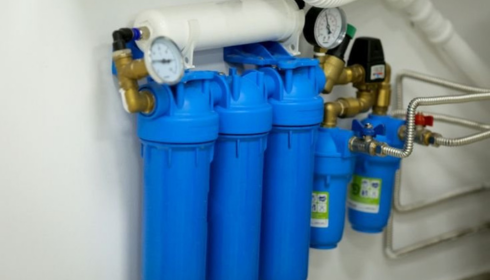
Pre-filters play a critical role in protecting more advanced components. They capture sediment, rust, and larger particles before water reaches finer membranes or carbon stages.
Without them, downstream filters clog faster and require more frequent replacement. That means more cost and more waste.
It’s a simple principle: protect the system from the start.
Sediment filtration is especially important for well water users, where sand and silt can enter supply lines. Even municipal water systems can release particles during infrastructure repairs.
Sometimes the clearest water isn’t the cleanest—it’s just the calmest. Pre-filtration ensures what you can’t see doesn’t compromise what comes later.
Balancing Purity and Sustainability
There’s a tension in water treatment. On one hand, we want ultra-pure water. On the other, we don’t want to waste gallons in the process or generate piles of discarded filters.
That’s why system design matters.
Modern purification systems are becoming more efficient. Some use demand-based regeneration cycles. Others reduce wastewater ratios compared to older models. Many manufacturers now emphasize recyclable components and longer-lasting filter media.
The goal isn’t perfection. It’s balance.
Water purification should feel like an upgrade—not an environmental contradiction.
Testing Before Transforming
If there’s one step that often gets skipped, it’s testing.
Homeowners sometimes install advanced systems based on marketing rather than actual need. But water conditions vary dramatically by region.
Hardness, pH, chlorine levels, dissolved solids—these metrics guide smarter decisions.
A simple water analysis can reveal whether you need molecular-level purification or whether a high-quality carbon and sediment system will suffice.
It’s not about having the most advanced setup. It’s about having the right one.
The Everyday Impact
When water tastes better, you drink more of it. It’s that simple.
Coffee tastes cleaner. Vegetables rinse more thoroughly. Even houseplants seem to respond differently.
These aren’t dramatic changes. They’re subtle improvements that compound over time.
And when you know your system operates efficiently—without unnecessary waste—you feel better about using it daily.
Final Thoughts
Water is fundamental. It moves through every part of your day, often unnoticed.
Upgrading your purification system isn’t about chasing trends. It’s about aligning quality with responsibility.
Whether that means choosing eco-friendly purification methods, understanding how molecular-level filtration works, or simply installing proper pre-filters to protect your system, the path forward begins with awareness.
Clean water should feel simple.
And in the best systems, it is.