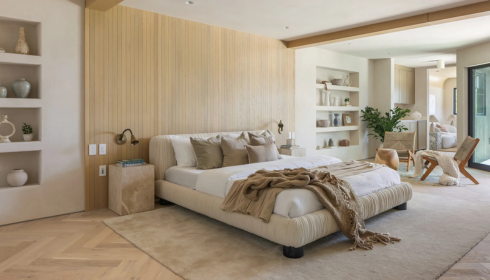
There’s something deeply personal about a bedroom. It’s more than just four walls, a bed, and blackout curtains—it’s where you start your mornings, end your long days, sometimes hide from the chaos of life, and maybe even sneak in a nap when no one’s looking. For such a central space in our daily routine, it’s wild how often we leave it last on the design priority list.
Your bedroom should be a sanctuary. A place that wraps around you and says, “Hey, it’s okay to slow down.” And creating that kind of atmosphere doesn’t require a huge budget or a total renovation. It just takes a little intention—and a whole lot of heart.
A Room With Purpose, Not Just Pretty Pillows
Let’s get one thing out of the way: you don’t need 12 throw pillows and a gallery wall to have a beautiful room. Great bedroom design starts with purpose. It’s about asking, how do I want to feel in here? Energized? Relaxed? Grounded?
Maybe you’re the kind of person who likes to wake up with natural light. Or maybe you’re a total blackout curtain devotee. Do you need space for yoga in the morning? A cozy chair for reading at night? Maybe you want your dog’s bed tucked in the corner, or a workspace by the window. These are the questions that should drive your design—not Instagram trends.
Because in the end, this is your space. Your vibe. Your rhythm.
Let’s Talk Calm: Why You Deserve More Tranquil Bedroom Spaces
We live in a world that’s loud. Digital noise. Family noise. The noise inside your own head. So when you walk into your bedroom, it should feel like the volume knob’s been turned way down.
Tranquil bedroom spaces aren’t just about aesthetics—they’re about psychology. Soft textures, layered lighting, gentle color palettes, and clutter-free surfaces work together to soothe the nervous system. Your bedroom doesn’t have to be beige-on-beige to feel peaceful, but it should feel balanced.
And here’s a little secret: tranquility looks different for everyone. For one person, it’s a minimalist, all-white space with crisp linens and nothing out of place. For someone else, it’s moody walls, velvet drapes, and a record player spinning Nina Simone in the corner. The goal isn’t to chase a vibe you saw on Pinterest—it’s to find what quiets your mind and centers you.
Designed Around You: The Power of a Custom Bedroom Layout
You know that weird corner in your room? Or how your nightstand’s always juuust out of reach? That’s where custom design steps in—not just for big homes or design nerds, but for anyone who wants their space to actually work.
A custom bedroom layout doesn’t mean you’re knocking down walls or investing in bespoke furniture (unless you want to, of course). It just means you’re paying attention to how you move through the space—and arranging it to support that.
If you always get out of bed on one side, why is the lamp on the other? If you like to journal before bed, do you have a light that doesn’t blind you or your partner? If you’re constantly running out of storage, maybe the answer isn’t adding more dressers—it’s rethinking the ones you’ve got.
Designing with intention helps prevent those daily annoyances we brush off—but quietly live with every day.
It’s in the Details (Even the Ones No One Sees)
You know what makes a bedroom truly yours? The small stuff.
The scent of your linen spray. The feel of your worn-in quilt. The drawer that holds your favorite book, that journal you write in once a week, and the chapstick you always forget to bring from the car.
These details don’t show up in a showroom. They’re layered over time. But a good design process makes space for them. It doesn’t rush. It doesn’t force symmetry or perfection. It invites imperfection, personality, and practicality to coexist.
Because the best spaces aren’t flawless. They’re familiar.
The Bedroom Isn’t Just a Room—It’s a Relationship
This might sound a little dramatic, but hear me out: your bedroom is a reflection of how you care for yourself. When it’s chaotic, it tends to mirror how you’re feeling. When it’s intentionally designed—even just a little—it becomes a quiet act of self-respect.
No, you don’t need to turn it into a luxury hotel suite. But making small changes—adding better lighting, investing in bedding that feels good on your skin, creating a little ritual corner—those things add up.
They say how you end your day affects how you start the next one. And where do both of those moments happen? Right here. In this room. That matters.
Final Thoughts: Start With One Thing
If you’re overwhelmed thinking, “I want my bedroom to feel better, but I don’t even know where to start,” here’s the simplest advice: just pick one thing. Change the lamp. Declutter your nightstand. Swap your pillowcases for something softer. Hang art that makes you smile first thing in the morning.